Discover the Science Behind Acoustical Clouds and Their Benefits for Concentration and Comfort
Have you ever walked into a space and found it impossible to hear yourself think, let alone hold a conversation? Perhaps the level of noise in your office space is making it difficult to conduct business. There’s no doubt it—Unwanted noise can significantly impact our lives, affecting concentration, communication, and even our well-being. This is where acoustical clouds come in – innovative solutions for noise reduction and improved sound control.
Understanding the Problem: Noise and its Ratings
Before diving into acoustical clouds, let’s address the issue they tackle – noise. Noise is simply unwanted sound. It’s measured in decibels (dB), with lower dB indicating quieter sounds and higher dB signifying louder ones. Here’s a breakdown of common noise levels for reference:
- 30 dB: Quiet whisper
- 40 dB: Quiet library
- 60 dB: Normal conversation
- 80 dB: Busy traffic
- 90 dB: Hairdryer
- 100 dB: Motorcycle engine
- 110 dB: Rock concert
Now, to assess a space’s acoustics, we consider two key ratings:
- Noise Reduction Coefficient (NRC): This number (between 0 and 1) indicates how well a material absorbs sound. An NRC of 0 signifies no absorption, while 1 represents complete absorption. For example, an NRC of 0.7 implies the material absorbs 70% of sound energy, leading to a quieter environment.
- Sound Transmission Coefficient (STC): This rating (between 0 and 25) measures how well a material blocks sound transmission between two rooms. Higher STC values indicate better sound blocking.
How Acoustical Clouds Work
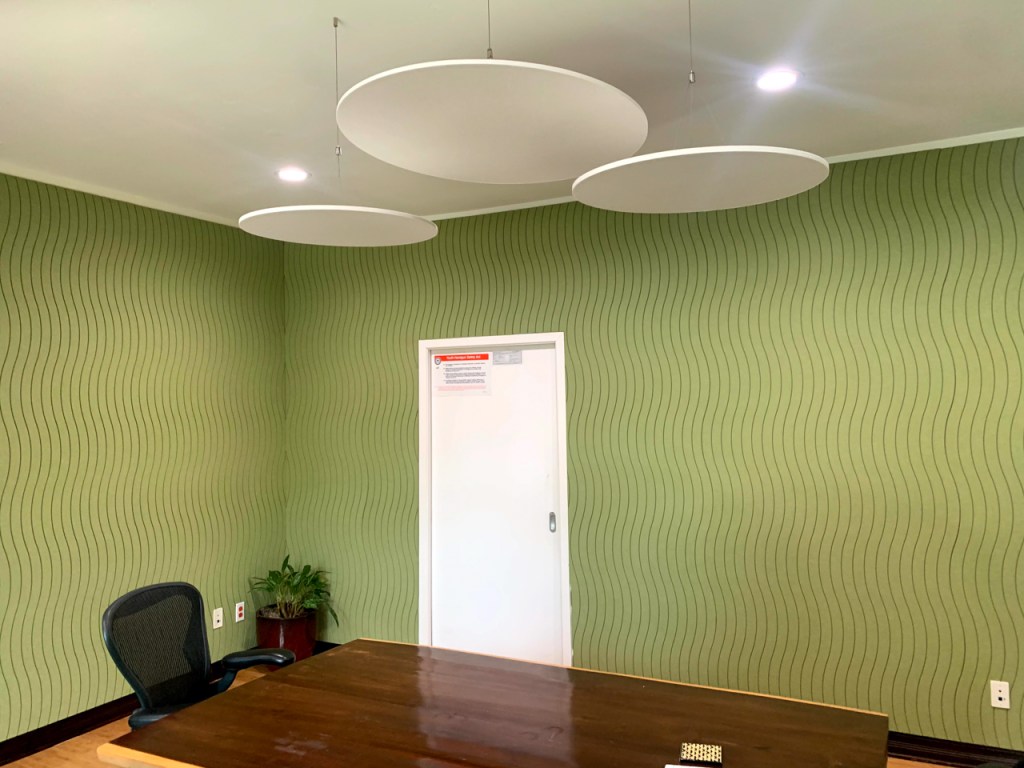
Acoustical clouds, also known as suspended sound absorbers, are ceiling-mounted panels made from various sound-absorbing materials like fiberglass, fabric, or recycled materials. They function by absorbing sound waves traveling through the air. The sound energy gets converted into heat energy within the cloud’s material, effectively reducing noise levels in the space.
Here’s a closer look at the science behind noise absorption:
- Porous Material: The core of acoustical clouds is typically made from a porous material with interconnected air pockets. These air pockets trap sound waves, preventing them from bouncing around the room and contributing to the overall noise level.
- Friction: As sound waves travel through the porous material, they encounter friction with the fibers or particles within. This friction converts some of the sound energy into heat, further reducing the sound reflected back into the room.
- Panel Thickness: Thicker acoustical clouds generally offer better sound absorption, as they provide more air pockets and material for sound waves to interact with.
Benefits of Acoustical Clouds
Beyond the significant noise reduction they offer, acoustical clouds provide several other advantages:
- Improved Speech Clarity: By absorbing echoes and reverberation, acoustical clouds make speech clearer and easier to understand. This is particularly beneficial in open-plan offices, conference rooms, classrooms, and lecture halls.
- Enhanced Focus and Productivity: Excessive noise can be a major distraction, hindering concentration and productivity. Acoustical clouds create a quieter environment, allowing people to focus better and accomplish tasks more efficiently.
- Increased Comfort: In noisy environments, people tend to raise their voices to compensate. This can lead to vocal strain and fatigue. Acoustical clouds help maintain a comfortable noise level, reducing the need to shout and promoting vocal health.
- Aesthetic Appeal: Acoustical clouds come in a variety of shapes, sizes, and colors. They can be strategically placed to not only improve acoustics but also enhance the visual appeal of a space.
Choosing the Right Acoustical Clouds
With a wide variety of acoustical clouds available, choosing the right ones requires considering several factors:
- Size and Shape: The size and shape of the cloud will influence its sound absorption capabilities. Larger clouds generally absorb more sound, while strategically placed clouds can target specific noise sources.
- Material: Different materials offer varying degrees of sound absorption. Fiberglass clouds are cost-effective and efficient, while fabric clouds can be more visually appealing. Consider the desired balance between performance and aesthetics.
- NRC Rating: Select clouds with an NRC rating appropriate for the specific noise reduction needs of the space. Higher NRC ratings are essential for noisy environments like call centers or restaurants.
- Fire Safety: Ensure the chosen acoustical clouds comply with local fire safety regulations.
Installation and Maintenance
Acoustical clouds are typically installed by suspending them from the ceiling using cables or specialized mounting hardware. The installation process is relatively straightforward and can be completed by qualified professionals.
Maintaining acoustical clouds is simple. Most require occasional dusting or vacuuming to remove accumulated dirt or debris. Some fabric clouds may require periodic cleaning according to the manufacturer’s instructions.
Alternatives to Acoustical Clouds and When They Might Be Better
While acoustical clouds are a powerful tool for noise reduction and sound control, they might not be the perfect solution for every situation. Here are some alternative approaches to consider:
- Wall Panels: Acoustic wall panels function similarly to acoustic clouds, but they are mounted directly on walls instead of being suspended from the ceiling. This can be a good option for rooms with limited ceiling space or where targeted noise absorption is needed on specific walls.
- Acoustic Baffles: These free-hanging sound absorbers are suspended vertically from the ceiling and are particularly effective in large, open spaces with high ceilings. They can be hung individually or in rows to create sound barriers and reduce noise transmission across open areas.
- Acoustic Curtains: Made from sound-absorbing fabrics, acoustic curtains can be installed on windows, doorways, or along walls. They offer a decorative touch while helping to block sound from entering or exiting a space.
- Seating with High Backrests: In office environments, utilizing furniture with high backrests can create a sense of enclosure and help absorb sound around individuals. This can be particularly beneficial in open floor plans where sound travels easily.
Making an Informed Decision
The best approach to noise reduction often involves a combination of strategies. Consider these factors when deciding between acoustical clouds and alternative solutions:
- Ceiling Height: If the ceiling height is limited, wall panels or acoustic curtains might be more suitable.
- Targeted Noise Source: For specific noise sources like machinery or projectors, strategically placed acoustic baffles could be highly effective.
- Aesthetics: If visual appeal is a major concern, consider fabric-wrapped acoustical clouds, acoustic curtains, or decorative wall panels.
- Budget: Acoustical clouds are generally a cost-effective solution, while some specialized options like custom-designed baffles might be more expensive.
Working With Soundproofing Professionals in San Diego
For complex noise control challenges, consulting with an acoustician can be beneficial. Acousticians are specialists who assess sound issues in a space and recommend the most effective solutions. Experts such as Soundproof San Diego can help you determine the right combination of soundproofing materials, including acoustical clouds, to achieve the desired noise reduction and create a more comfortable and productive environment.