
Services
Soundproofing Treatment
Reduce noise transfer, maintain privacy, and improve acoustics of any space.
Soundproofing Services
Soundproof San Diego specializes in soundproofing first and fore-most. With over a decade of experience in construction and studio engineering, Soundproof San Diego is the ideal contractor for your next project. Whether the job is big or small, you can expect fast, friendly, clean, professional, and reliable service from all of our well-trained installers. Soundproof San Diego is licensed and insured to perform construction services in the State of California. Get the sound sleep you deserve and call Soundproof San Diego today!
-
Increase Your Comfort
-
Increase Your Privacy
-
Increase Your Peace
Enjoy living in a peaceful environment free from stomping neighbors, barking dogs, practicing musicians, and noisy equipment.
Comply with noise regulations and create a comfortable work environment free from distractions while maintaining privacy.
Increase safety, productivity and the overall health of workers by optimizing the sound quality within your building.
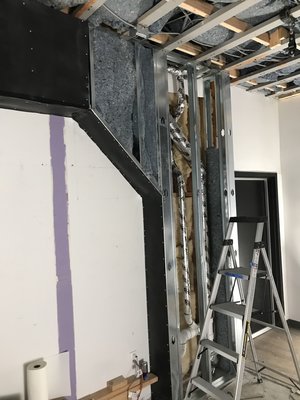
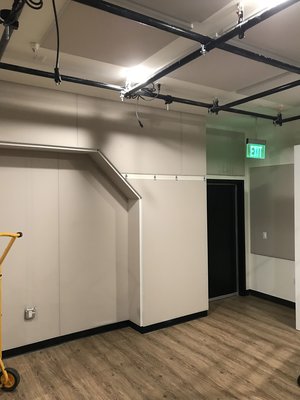
Partition Soundproofing (Wall and Door)
Soundproofing is the process of reducing or blocking sound from entering or escaping a room or building. There are a lot of misconceptions about what soundproofing is and isn’t, so it’s important to have a clear understanding of what is involved.
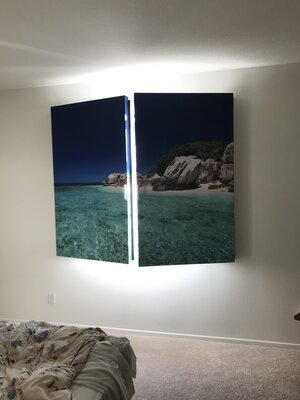
Firstly, it’s important to realize that soundproofing is not the same as sound absorption. Sound absorption involves the use of materials, such as acoustic panels or foam, to reduce the amount of sound reflection in a room. While sound absorption can help with reducing echo and improving sound quality, it does not necessarily reduce the amount of sound that passes through walls or ceilings. The good news is Soundproof San Diego offers both sound absorption and soundproofing services – depending on what your specific circumstances are.
Soundproofing involves creating a barrier that prevents sound from entering or escaping a room. This can be achieved using a variety of materials, such as acoustic insulation, mass-loaded vinyl, and sound barriers. These materials are designed to absorb or block sound waves, reducing the amount of noise that can pass through.
Soundproofing is that it is not a one size fits all solution. The level of soundproofing needed depends on a variety of factors, such as the source of the noise, the frequency of the sound, and the location of the room.

Door Soundproofing
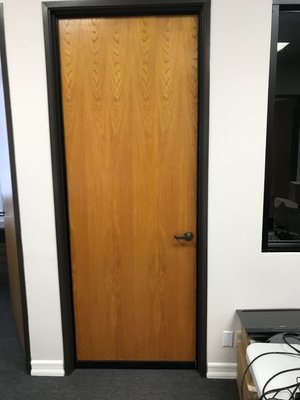
The most common weak point in a wall is usually a door if present. Doors are a perfect place for sound to escape or get it. The door itself is usually “weaker” than the wall in terms of weight per square foot and also has a small gap around the perimeter between the door and opening when closed.
A good rule of thumb is if you can see light coming through the reveals of the door then sound is also penetrating through the same gap. Installing door seals is one of the many specialty services offered by Soundproof San Diego and can drastically improve the soundproofing of a room.
If your door currently has seals, they may need to be inspected. Even a small mistake in installation can ruin the potential performance. Often times seals are installed to the door frame but nothing is installed to the bottom of the door itself, this forgotten gap nulls the effects of the other door seals. A seal system must be complete to work properly. Call Soundproof San Diego today and have your door sealed from distracting and unfavorable external noise.


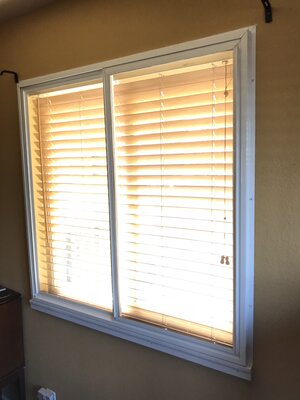
Window Soundproofing
Are you experiencing unnecessary amounts of noise from your environment? Windows tend to degrade over the years, due in part by their seals failing, this leads to more and more sound making it’s way inside.
Soundproof San Diego can design and recommend a window solution to fit your needs and budget as well as perform the installation. Don’t let problematic windows be a burden on your life. Call Soundproof San Diego today to restore the peace and quiet in your home.

These Are the Most Frequently Asked Questions We Receive About Soundproofing and Acoustical Treatments
We are happy to answer your questions over the phone as well, don’t hesitate to reach out!
Soundproofing is the process of reducing or blocking the transmission of sound from one space to another. It involves using materials and techniques to absorb, dampen, or isolate sound waves, thereby minimizing their impact on the receiving space.
Soundproofing focuses on preventing sound from entering or leaving a space, while acoustic treatment is about improving the sound quality within a room. Soundproofing deals with sound transmission, while acoustic treatment addresses sound reflections and reverberations.
Yes soundproofing can be done in existing rooms
Sound can be categorized into various types, including airborne sound (like voices and music) and impact sound (like footsteps). Sounds also have different frequencies, ranging from low-frequency bass to high-frequency treble.
Sound Transmission Class (STC) and Outdoor-Indoor Transmission Class (OITC) ratings are used to evaluate and specify the sound insulation or sound transmission properties of building materials, walls, windows, and other elements within buildings.
These ratings are important for various professionals and individuals involved in the construction and design of buildings, particularly those concerned with noise control and acoustic performance.
Here are some of the key users and contexts for STC and OITC ratings:
Architects and Building Designers: Architects and building designers use STC and OITC ratings to select materials and building assemblies that will provide the desired level of sound insulation in various building types, such as residential, commercial, and industrial buildings. They design spaces with the goal of meeting specific acoustic requirements and minimizing noise transmission between rooms and from outside sources.
Acoustic Consultants: Acoustic consultants (that's us!) are experts in designing spaces with optimal acoustic performance. We utilize STC and OITC ratings to assess and recommend building materials and construction techniques to achieve specific sound isolation goals in our projects.
Construction and Building Contractors: Contractors are responsible for implementing the designs and specifications provided by architects and designers. They need to understand and work with materials that have specific STC and OITC ratings to ensure that the intended level of sound isolation is achieved during the construction process.
Manufacturers and Suppliers: Manufacturers of building materials, windows, doors, and other sound-insulating products provide STC and OITC ratings for their products. These ratings help customers, including architects and builders, choose the right materials to meet their sound insulation needs.
Building Owners and Facility Managers: Building owners and managers are concerned with maintaining a comfortable and quiet indoor environment. They use STC and OITC ratings to assess and upgrade the sound insulation of their buildings as needed, especially in multi-unit residential buildings, hotels, and commercial properties.
Acoustic Engineers and Researchers: Acoustic engineers and researchers use STC and OITC ratings to study and improve the acoustic performance of building materials and assemblies. They may develop new sound-insulating materials and test their performance based on these ratings.
Regulatory Authorities and Building Codes: Some building codes and regulations specify minimum STC and OITC requirements for certain types of buildings, such as residential dwellings or healthcare facilities. Compliance with these standards is essential to ensure occupant comfort and safety.
STC and OITC ratings provide standardized methods for assessing the sound insulation properties of building elements, helping professionals and individuals make informed decisions to create spaces with the desired level of noise control and acoustic privacy.
For more information about STC and OITC Ratings, check out our blog post!
The term "NRC rating" refers to the Noise Reduction Coefficient, a measure of how well a material or surface can absorb sound and reduce its reflection. NRC ratings are used in the fields of architecture, interior design, and acoustics to assess and specify materials for the acoustic performance of a space.
Here are some of the primary users and contexts where NRC ratings are important:
Architects and Interior Designers: Architects and interior designers use NRC ratings to select materials such as wall panels, ceiling tiles, flooring, and furniture that can improve the acoustic environment within a building. They choose materials with specific NRC ratings to achieve the desired level of sound absorption and control in various spaces, such as offices, conference rooms, auditoriums, and residential homes.
Acoustic Consultants (That's us!) : Acoustic consultants are professionals who specialize in designing spaces with optimal acoustic properties. We use NRC ratings to recommend suitable materials and construction methods to meet specific sound control requirements. This is often for projects like theaters, recording studios, and concert halls.
Building Owners and Facility Managers: Building owners and facility managers are responsible for maintaining and improving the acoustic performance of their properties.
They use NRC ratings when renovating or retrofitting spaces to enhance their acoustic qualities, which can have a significant impact on occupant comfort and productivity.
Manufacturers and Suppliers: Manufacturers of acoustic products, such as acoustic panels, ceiling tiles, and flooring materials, provide NRC ratings for their products. These ratings help customers, including architects and designers, make informed decisions when selecting materials for their projects.
Acoustic Researchers and Engineers: Researchers and engineers in the field of acoustics use NRC ratings as part of their studies and experiments. They may also develop new materials and technologies to improve acoustic performance and test them against established standards, including NRC.
Regulatory Authorities: Some building codes and regulations may stipulate minimum NRC requirements for specific types of spaces to ensure occupant comfort and safety.
Consumers: Homeowners and individuals looking to improve the acoustics of their living spaces may also refer to NRC ratings when selecting acoustic products for personal use.
NRC ratings provide a standardized way to assess the sound-absorbing properties of materials, helping professionals and individuals make informed decisions when designing, constructing, or renovating spaces with specific acoustic requirements.
For more information about NRC Ratings, check out our blog post:
The Impact Insulation Class (IIC) rating is a measure of a floor assembly's ability to reduce the transmission of impact noise, such as footsteps or objects being dropped, from one level of a building to another. IIC ratings are particularly important for professionals and individuals involved in the construction, design, or renovation of buildings, where noise control between floors is a concern. Here are some key users and contexts where IIC ratings are relevant:
Architects and Building Designers: Architects and building designers use IIC ratings to select flooring materials and systems that can help achieve the desired level of noise control between different levels of a building. They may specify flooring solutions with high IIC ratings to reduce impact noise transmission in multi-story residential, commercial, or institutional buildings.
Acoustic Consultants: Acoustic consultants (That's us!) specializing in architectural acoustics use IIC ratings to evaluate and recommend floor assembly designs, materials, and construction techniques to achieve specific impact noise reduction goals in our projects. We work on a range of buildings, including residential, commercial, and industrial.
Construction and Building Contractors: Contractors are responsible for implementing the design and specifications provided by architects and designers. They need to understand and work with flooring materials and assemblies that meet or exceed certain IIC ratings to ensure effective impact noise control during construction.
Manufacturers and Suppliers: Manufacturers of flooring materials and systems provide IIC ratings for their products. These ratings help customers, including architects and builders, choose appropriate flooring solutions to meet their impact noise reduction needs.
Building Owners and Facility Managers: Building owners and managers are concerned with maintaining a comfortable and noise-free indoor environment. They use IIC ratings when selecting or upgrading flooring materials and systems to reduce impact noise transmission within their buildings, particularly in multi-unit residential buildings, hotels, and commercial properties.
Acoustic Engineers and Researchers: Acoustic engineers and researchers may use IIC ratings to study and improve the impact noise performance of flooring materials and systems. They may develop new products or construction methods and test them based on these ratings.
Regulatory Authorities and Building Codes: Some building codes and regulations may stipulate minimum IIC requirements for specific types of buildings to ensure that noise transmission between floors meets certain standards.
IIC ratings play a crucial role in ensuring that buildings provide effective impact noise control, which is essential for occupant comfort and acoustic privacy in multi-story structures. Professionals and individuals involved in the construction and design of buildings rely on IIC ratings to make informed decisions about flooring materials and systems.
For more information about IIC Ratings, check out our blog post!
Testimonials
Clients who hire Soundproof San Diego desire to work with someone who is knowledgeable and provides peace of mind, most of our clients are literally at their witts end by the time they reach out to us, and we are honored to serve them, restoring order and sanity back to their lives.
Soundproof San Diego is one of the best contractors I have worked with. Neil is one of the most detailed people I have ever met and helped me decide what worked best with the rooms I needed soundproof. The team worked their butts off on a tight timeline and my god the end result was amazing. I highly recommend Soundproof San Diego to anyone, even simple jobs! You will not be disappointed.
Soundproof San Diego is one of the highest quality contractors I have ever worked with (and I grew up in a contractor family). From Neil’s initial contact and evaluation, through work of the crew, very professional and excellent work. I had Bill as the project PM and he was very communicative and very easy to work with. We discovered one small issue the last day of the 4 week job, and the crew immediately addressed it, no questions asked. This work was done for the ceilings of 1/2 of a condo built in the 70s. The results are as expected, not “library silence”, but massive sound reduction from the AirBnB above me. I will have them back at some point to do the other half of my unit. you cannot go wrong with Soundproof San Diego.
We hired Soundproof San Diego to create more privacy between our house and an attached ADU. They were able to assess our situation and provide several different treatment options. After about a weeks worth of work, they successfully completed the project which included a complete teardown of the wall between the two units. The soundproof job is so great that you can't hear basically any noise between the units accomplishing exactly as we had wished for. The team was super communicative and helpful throughout this process.