Learn What a Suspended Acoustic Ceiling is and How it Can Help Calm the Chaos in an Office Building
Have you ever walked into a room with such a bad echo you could barely hear yourself think? Or maybe you’ve experienced frustration in an open-plan office where co-worker conversations constantly disrupt your focus. If so, you’ve firsthand experienced the importance of good acoustics in a space.
Fortunately, there’s a simple and effective solution: suspended acoustic ceilings. These ceiling systems offer a multitude of advantages, making them a popular choice for businesses and homeowners alike.
What is a Suspended Acoustic Ceiling?
If you’ve been in a commercial space, you likely have seen suspended ceilings. It is a common application that has been utilized for years. Essentially, suspended acoustic ceilings are false ceilings constructed beneath an existing soffit, creating a lower and more aesthetic surface. The added benefit is that building owners can choose tiles with various levels of sound absorption characteristics. This makes them ideal for commercial spaces.
The Top Benefits of Suspended Acoustic Ceilings
The first and primary benefit of this acoustic treatment is their ability to absorb sound waves. Traditional ceilings, typically made of plaster or drywall, reflect sound waves into the room, leading to echo and reverberation. Suspended acoustic ceilings, however, are constructed from sound-absorbing materials like fiberglass, mineral wool, or fabric panels. When sound waves hit these panels, they are converted into tiny amounts of heat energy, effectively dampening noise and creating a more pleasant acoustic environment.
But that is not their only advantage.
Benefits Beyond Noise Reduction
While sound absorption is a key advantage, suspended acoustic ceilings offer a range of other benefits:
- Improved Speech Clarity: In conference rooms, classrooms, and open-office environments, good speech clarity is essential. Suspended acoustic ceilings help to reduce background noise, making it easier to understand speech and improving communication.
- Enhanced Focus and Productivity: Excessive noise can be a significant productivity drain. By absorbing sound and reducing echo, suspended acoustic ceilings can create a quieter, more focused work environment, leading to increased productivity.
- Privacy Enhancement: In open floor plans, sound travels easily. Suspended acoustic ceilings can help to contain sound within designated areas, improving privacy for meetings or phone calls.
- HVAC Noise Reduction: Suspended ceilings can help to conceal HVAC (heating, ventilation, and air conditioning) systems, reducing noise generated by fans and ductwork.
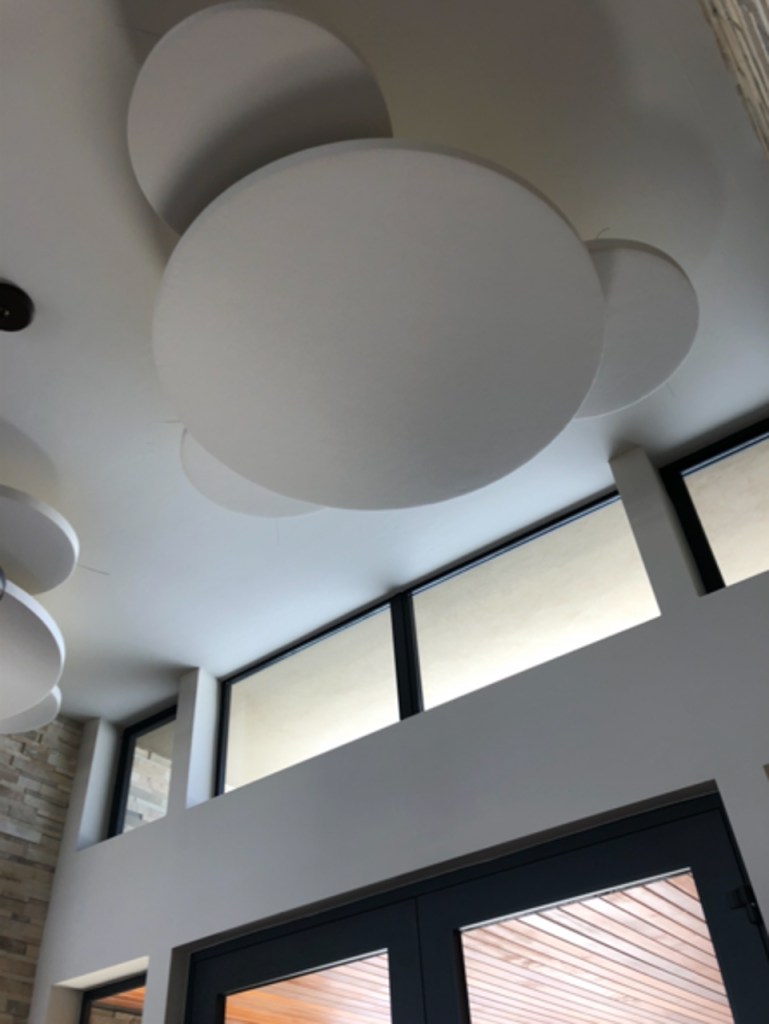
- Improved Aesthetics: Gone are the days of boring, dropped ceilings. Today’s suspended acoustic panels come in various textures, colors, and patterns, allowing you to create a visually appealing and modern look that complements your space’s décor.
- Easy Access to Utilities: The space above a suspended ceiling grid provides easy access to electrical wiring, plumbing, and HVAC systems for maintenance and repairs.
How to Choose the Right Suspended Ceiling
With a variety of suspended ceiling options available, selecting the right one for your needs depends on several factors:
- Sound Absorption Rating (NRC): This rating indicates how well a ceiling tile absorbs sound. NRC ratings range from 0 (poor absorption) to 1 (perfect absorption). Higher NRC ratings are better for areas requiring maximum noise control.
- Material: Different materials offer varying degrees of sound absorption, aesthetics, and fire resistance. Fiberglass is a cost-effective option with good sound absorption. Mineral wool offers excellent sound absorption and fire resistance. Fabric wall systems provide a decorative touch and can be a good choice for design-focused applications.
- Size and Style: Suspended ceiling panels come in standard sizes like 2ft x 2ft and 2ft x 4ft. They can also be custom-sized for specific projects. A variety of edge styles are available, such as regular (square with a flange for easy installation) and beveled for a more finished look.
When considering suspended acoustic ceilings, it is always best to consult with a professional soundproofing company. Soundproofing services assess your specific needs, recommend the most suitable ceiling system, and ensure proper installation for optimal acoustic performance.
Installation and Maintenance of Suspended Acoustic Ceilings
Once you’ve chosen the ideal suspended acoustic ceiling system for your space, you’ll need to consider acoustic treatment installation and maintenance.
Installation:
- Professional Installation Recommended: While some suspended ceiling systems are designed for DIY installation, for optimal performance and to ensure the ceiling’s structural integrity, professional installation is highly recommended. Experienced installers understand proper grid assembly, panel placement, and cutting techniques to ensure a flawless finish.
- The Grid System: The foundation of a suspended ceiling is the metal grid system that suspends the ceiling panels from the existing ceiling structure. The grid typically consists of main tees and cross tees that interlock to create a network.
- Panel Installation: Once the grid is assembled, the acoustic panels are carefully placed within the grid framework. Depending on the panel type, they may lay in or require a lift-and-lock mechanism for secure placement.
Maintenance:
Suspended acoustic ceilings are generally low-maintenance. However, to ensure optimal performance and longevity, here are some key maintenance tips:
- Regular Cleaning: Dust buildup can impact the sound absorption capabilities of the ceiling panels. Use a soft brush or microfiber cloth to gently remove dust regularly. For some panel types, vacuuming with a low-suction attachment may be suitable. Always refer to the manufacturer’s cleaning recommendations for your specific ceiling system.
- Spot Cleaning: For minor spills or stains, use a damp cloth with a mild detergent solution. Avoid using harsh chemicals or abrasive cleaners, as they can damage the panels.
- Water Damage: While some suspended ceiling panels are moisture-resistant, they are not waterproof. If exposed to water damage, address the source of the leak promptly and allow the panels to dry completely. Severely damaged panels may need to be replaced.
- Periodic Inspection: Routinely inspect your suspended ceiling for any signs of damage, sagging, or loose panels. Early detection and repair can help prevent further issues.
Additional Considerations
- Ceiling Height: Suspended ceilings lower the overall ceiling height of a room. While minimal for most standard grid systems (typically 12-18 inches), it’s essential to factor this in, especially in rooms with already low ceilings.
- Lighting Integration: The layout of your existing lighting may need to be adjusted to accommodate the new ceiling grid. Some suspended ceiling systems offer integrated lighting fixtures for a streamlined look.
- Cost: The cost of suspended acoustic ceilings varies depending on the size of the space, the chosen materials, and the complexity of the installation. However, the long-term benefits of improved acoustics, soundproofing, and potentially reduced energy costs due to better HVAC performance make them a worthwhile investment.
By carefully considering these factors and consulting with a soundproofing San Diego professional, you can ensure that suspended acoustic ceilings become a valuable asset in creating a more comfortable, productive, and acoustically balanced environment.